Is Sourdough Bread Healthy? Tangy, Crusty and a Little Overhyped
Sourdough's slow fermentation does change the loaf in useful ways. It does not turn white bread into whole grain, and it is definitely not gluten-free.
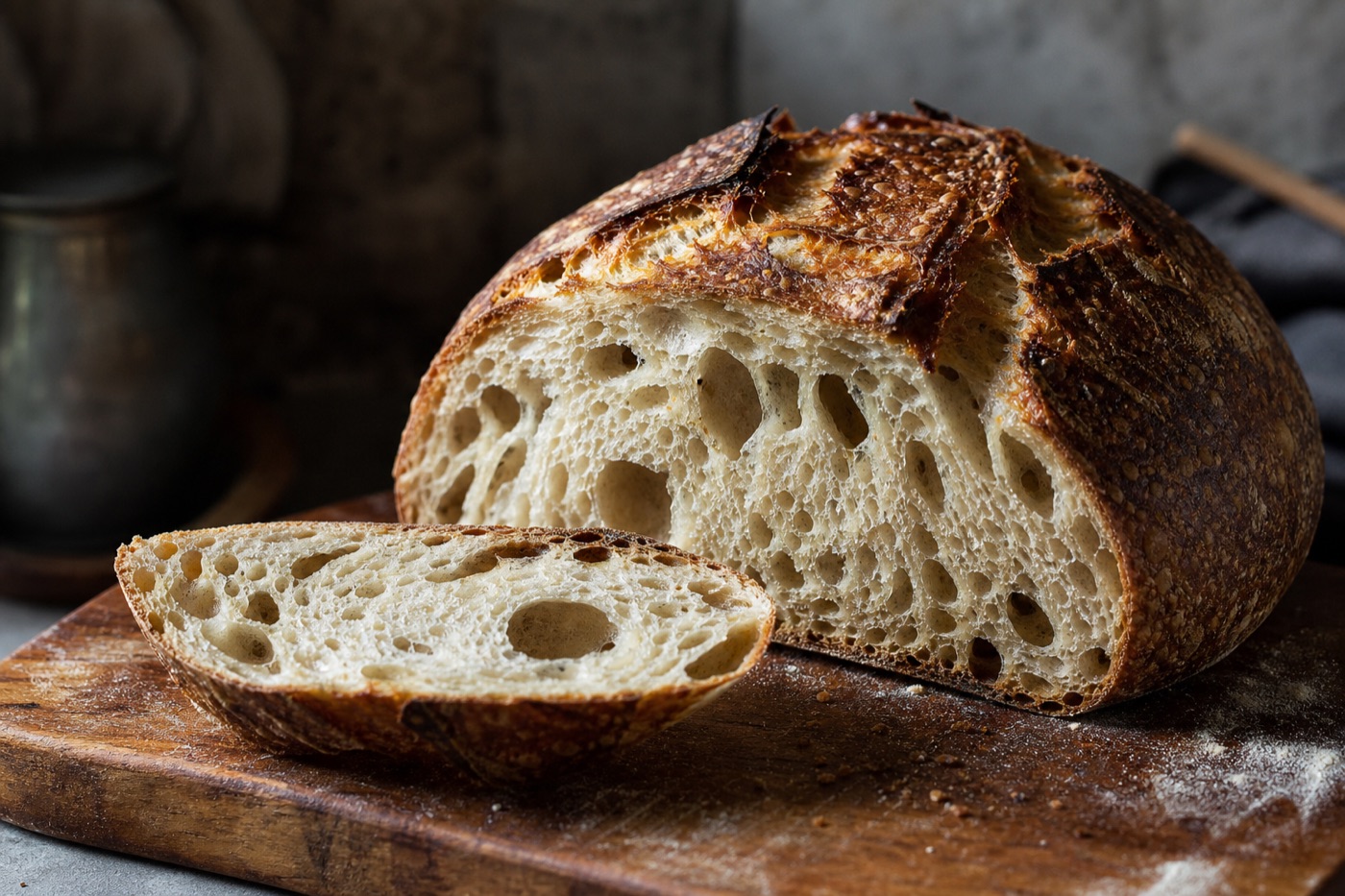
Sourdough is a good bread, and slightly better than ordinary white bread in a couple of ways. Its slow fermentation changes how the starch behaves and how your body handles some minerals. But most sourdough is still made from white flour, so the halo is bigger than the actual difference.
What’s in it
A 1-ounce slice of white sourdough (about 28 to 32 g) typically has around 75 to 90 calories, about 15 grams of carbohydrate, roughly 3 grams of protein, a gram or less of fiber and about 150 to 200 milligrams of sodium, based on typical USDA FoodData Central values for comparable breads. Bakery loaves are often sliced thick, and a 2-ounce slab doubles every number.
Like other breads made from enriched flour, white sourdough supplies some iron, folate and B vitamins. Whole-wheat or rye sourdough brings more fiber, magnesium and other nutrients from the bran.
The good
Fermentation does real work. Sourdough rises with a starter, a culture of wild yeasts and lactic acid bacteria. Over many hours, they produce acids that give the bread its tang and change the dough. Some research suggests this can lead to a slightly gentler blood sugar response than conventional white bread, though the effect varies.
Better mineral availability. Grains contain phytate, a compound that binds minerals like iron and zinc. The long, acidic fermentation of sourdough breaks down some phytate, which may make those minerals easier to absorb.
Simple ingredients. Traditional sourdough needs only flour, water, salt and starter. Many loaves skip the added sugars, oils and conditioners found in some sliced sandwich breads.
It satisfies. Chewy crumb and a crackly crust make one slice feel substantial. Toasted and topped with something good, it is a meal rather than a filler.
The catch
It is usually white bread. Most sourdough is made with refined flour, so fiber is low. The Dietary Guidelines for Americans recommend that at least half of your grains be whole, and white sourdough does not count toward that.
Not gluten-free. Fermentation breaks down some proteins, but wheat sourdough still contains gluten and is unsafe for people with celiac disease.
Not probiotic. Baking kills the live microbes, so the bread does not deliver probiotics.
Thick slices and big loaves. Artisan slices can be two or three times the size of standard sandwich bread. Torn from a warm loaf with butter, the calories climb quickly.
Sodium. Bread is one of the bigger sources of sodium in many diets simply because people eat it often. Adults are advised to stay under 2,300 milligrams a day.
Imitations. Some supermarket loaves labeled sourdough use commercial yeast and added acids or vinegar for flavor, which skips the long fermentation.
How to eat it well
- Go whole-grain when you can. Whole-wheat, rye or mixed-grain sourdough keeps the tang and adds fiber.
- Slice it yourself. Buy unsliced loaves and cut thinner slices, or ask the bakery to slice it thin.
- Top it with protein and plants. Eggs, smashed beans, tomatoes, greens or a spread of hummus turn toast into a balanced meal. Sourdough with avocado or a soft-boiled egg is hard to beat; see are eggs healthy.
- Watch the butter. A thin layer of olive oil or nut butter is a better everyday spread.
- Freeze half the loaf. Real sourdough stales quickly. Freeze slices and toast from frozen.
- Read the ingredients. Look for flour, water, salt and starter or culture. Put a specific note like “whole-grain sourdough” on your shopping list; how to build a healthy grocery list shows how.
Who should go easy
People with celiac disease must avoid wheat, rye and barley sourdough and choose certified gluten-free bread. Those with a wheat allergy should avoid it as well. People with irritable bowel syndrome or other digestive conditions who find some breads troublesome can ask a registered dietitian whether long-fermented sourdough might work for them. Anyone managing diabetes should count bread within their carbohydrate plan, and those watching sodium should keep an eye on how many slices they eat in a day.
The verdict
Sourdough is a satisfying, simply made bread with a few modest perks from fermentation. Choose whole-grain versions when possible, slice it thinner than the bakery does and top it with protein and vegetables. It is good bread, not health magic.
Your questions, answered
- Is sourdough healthier than regular white bread?
- Slightly, in some ways. Fermentation may produce a somewhat gentler rise in blood sugar and can break down compounds that limit mineral absorption. The calories, carbohydrates and fiber are similar if both are made from white flour.
- Is sourdough gluten-free?
- No. Sourdough made from wheat, rye or barley contains gluten, and people with celiac disease must avoid it. Some people with non-celiac sensitivities report tolerating long-fermented sourdough better, but that is individual and should be discussed with a doctor.
- Does sourdough have probiotics?
- Not in a meaningful way. The bacteria and wild yeast that ferment the dough are killed by baking. Some fermentation byproducts remain, but sourdough bread is not a probiotic food like yogurt or kefir.
- How can I tell if bread is real sourdough?
- Look for a short ingredient list built on flour, water, salt and a starter or culture, ideally without commercial yeast or added vinegar for flavor. Some loaves sold as sourdough are made quickly and flavored to taste sour.
Sources
- USDA FoodData Central
- Dietary Guidelines for Americans
- Harvard T.H. Chan School of Public Health, The Nutrition Source
General information, not medical advice. If a food decision depends on your health, talk to a doctor or registered dietitian.
Clara runs The Healthy Eaters and edits every verdict before it goes out. She likes food writing that answers the question in the first paragraph.
More from Clara
More from The Healthy Eaters
- Are Almonds Healthy? A Handful With Surprising Range
Almonds bring vitamin E, magnesium, fiber and good fats in a pocket-sized package. The only real trick is knowing when a handful becomes a bagful. - Are Bananas Healthy? The Case for Fruit's Most Portable Snack
Bananas get side-eye for their sugar and carbs. Here is what one actually contains, why ripeness changes the picture, and who should keep count. - Are Eggs Healthy? The Cholesterol Question, Cracked Open
Eggs have been nutrition's favorite villain and its favorite hero, sometimes in the same decade. Here is where the evidence sits now, and what goes on the plate beside them. - Are Potatoes Healthy? Rescuing the Spud From Its Reputation
The humble potato is richer in potassium and vitamin C than most people assume. How it gets to your plate matters far more than the potato itself.