Is Avocado Healthy? Yes, and Here Is How Much Counts as a Serving
Avocado is the rare trendy food that lives up to the hype. It is also rich enough that a whole one on toast is a bigger deal than it looks.
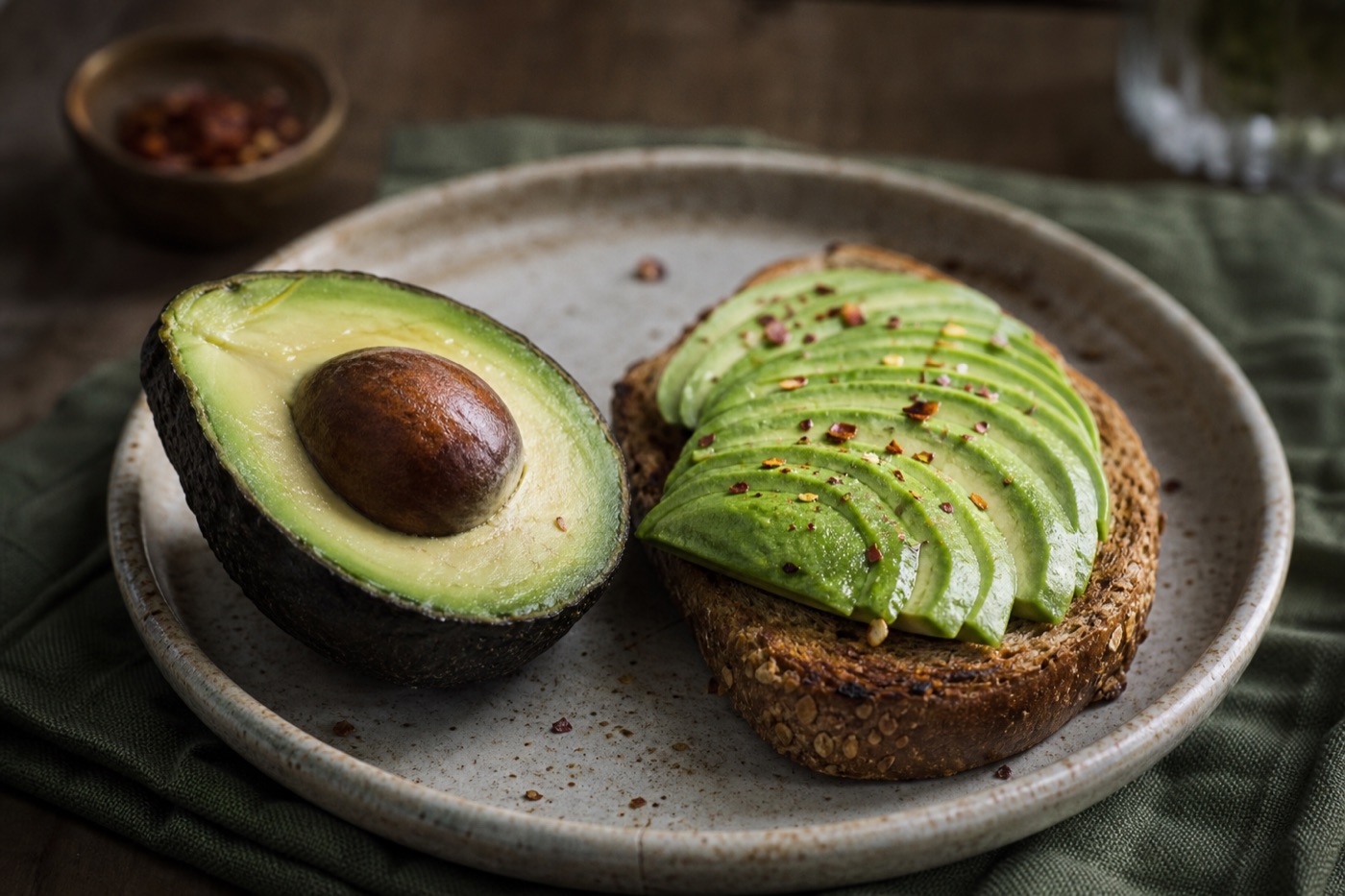
Avocado is healthy, and the enthusiasm is mostly deserved. It is one of the few fruits built around fat rather than sugar, and the fat is mostly the monounsaturated kind that heart-health guidance favors. The one thing to respect is its richness: a whole avocado is closer to a few tablespoons of oil than to an apple.
What’s in it
A third of a medium avocado (about 50 g, the standard label serving) has around 80 calories, roughly 7 grams of fat, about 3 grams of fiber and about 1 gram of protein, based on typical USDA FoodData Central values. About two-thirds of the fat is monounsaturated.
A whole medium avocado (about 150 g of edible flesh) comes to roughly 240 calories, 22 grams of fat, 10 grams of fiber and around 700 milligrams of potassium. It also supplies folate, vitamin K, vitamin E, vitamin C and several B vitamins. Sugar is very low, under a gram for the whole fruit.
The good
Better fats. The American Heart Association encourages replacing saturated fats with unsaturated ones, and avocado is an easy way to do it. Spreading it on toast instead of butter, or using it in place of mayonnaise in a sandwich, shifts the balance in the right direction.
Real fiber. Ten grams in a whole avocado is a substantial share of a day’s needs. Most of us fall short on fiber, and avocado helps without tasting like a fiber supplement.
Potassium and folate. Avocado carries a solid dose of potassium, which supports healthy blood pressure, and folate, which is important for cell growth. Ounce for ounce, it is competitive with bananas on potassium.
It helps other foods. Fat helps your body absorb fat-soluble nutrients like the carotenoids in tomatoes, carrots and leafy greens. A few slices of avocado on a salad do double duty.
Satisfaction. Creamy texture plus fat and fiber make meals with avocado feel more complete.
The catch
Calorie density. Avocado toast made with a whole avocado on two thick slices of bread can easily pass 500 calories before an egg goes on top. That can be a reasonable meal; it is just not a light snack.
Guacamole and its companions. Homemade guacamole is basically avocado, lime, onion and salt. The concern is usually the chips, which can outweigh the dip in calories and sodium.
Price and waste. Avocados can be pricey, and they go from rock-hard to overripe quickly. Buying a mix of ripe and firm fruit helps.
Fat is still fat. Healthy fats provide 9 calories per gram, like any fat. Avocado works best when it replaces other fats rather than piling on top of them.
How to eat it well
- Use it as a swap. Mash it on toast instead of butter or cream cheese, or blend it into dressings instead of mayonnaise. For toast, a sturdy bread works well; see our take on sourdough.
- Portion by quarters. A quarter to a half avocado is plenty for most meals.
- Pair it with protein. Avocado with eggs, beans or fish makes a balanced plate. We cover eggs in are eggs healthy.
- Add it to salads and bowls. A few slices make a big salad more satisfying and help your body absorb nutrients from the vegetables.
- Mix your fats. Rotate avocado with olive oil, nuts and seeds; our verdict on olive oil explains why that fat deserves a spot too.
- Save the half. Store the unused half with the pit in, cut side covered tightly, and use it within a day.
Who should go easy
People taking blood thinners such as warfarin should keep their vitamin K intake consistent and ask their doctor how foods like avocado fit. Those with kidney disease who must limit potassium should check with a registered dietitian. People with a latex allergy sometimes react to avocado and should talk to an allergist. If you are following a calorie target, measuring avocado for a week can help you get a feel for portions.
The verdict
Avocado is a nutritious, satisfying source of healthy fat, fiber and potassium. Use it in place of butter, mayo or creamy dressings, keep portions to a quarter or half at a time, and pair it with vegetables and protein. Healthy and rich are not opposites; just treat it like the luxury fat it is.
Your questions, answered
- How much avocado should I eat a day?
- There is no official limit. The standard label serving is a third of a medium avocado, about 80 calories. Half to one avocado a day can fit a healthy diet, especially when it replaces less healthy fats rather than being added on top.
- Is avocado good for weight loss?
- It can help, because its fat and fiber make meals more satisfying. It is calorie-dense, though, at about 240 calories for a whole medium fruit, so measured portions matter if you are trying to lose weight.
- Is avocado a fruit or a vegetable?
- Botanically, avocado is a fruit, a large berry with a single seed. In the kitchen and in nutrition it is usually treated as a source of healthy fat, more like nuts and olive oil than like apples.
- How do I keep avocado from turning brown?
- Browning happens when the flesh meets air. Squeeze lemon or lime juice over the cut surface, press plastic wrap directly onto it, and refrigerate. Browned flesh is safe to eat, just less appealing.
Sources
General information, not medical advice. If a food decision depends on your health, talk to a doctor or registered dietitian.
Clara runs The Healthy Eaters and edits every verdict before it goes out. She likes food writing that answers the question in the first paragraph.
More from Clara
More from The Healthy Eaters
- Are Almonds Healthy? A Handful With Surprising Range
Almonds bring vitamin E, magnesium, fiber and good fats in a pocket-sized package. The only real trick is knowing when a handful becomes a bagful. - Are Bananas Healthy? The Case for Fruit's Most Portable Snack
Bananas get side-eye for their sugar and carbs. Here is what one actually contains, why ripeness changes the picture, and who should keep count. - Are Eggs Healthy? The Cholesterol Question, Cracked Open
Eggs have been nutrition's favorite villain and its favorite hero, sometimes in the same decade. Here is where the evidence sits now, and what goes on the plate beside them. - Are Potatoes Healthy? Rescuing the Spud From Its Reputation
The humble potato is richer in potassium and vitamin C than most people assume. How it gets to your plate matters far more than the potato itself.