How to Build a Healthy Grocery List You Will Actually Use
A good grocery list is the most underrated health tool in your kitchen. Here is how to write one in 15 minutes, with a template you can copy.
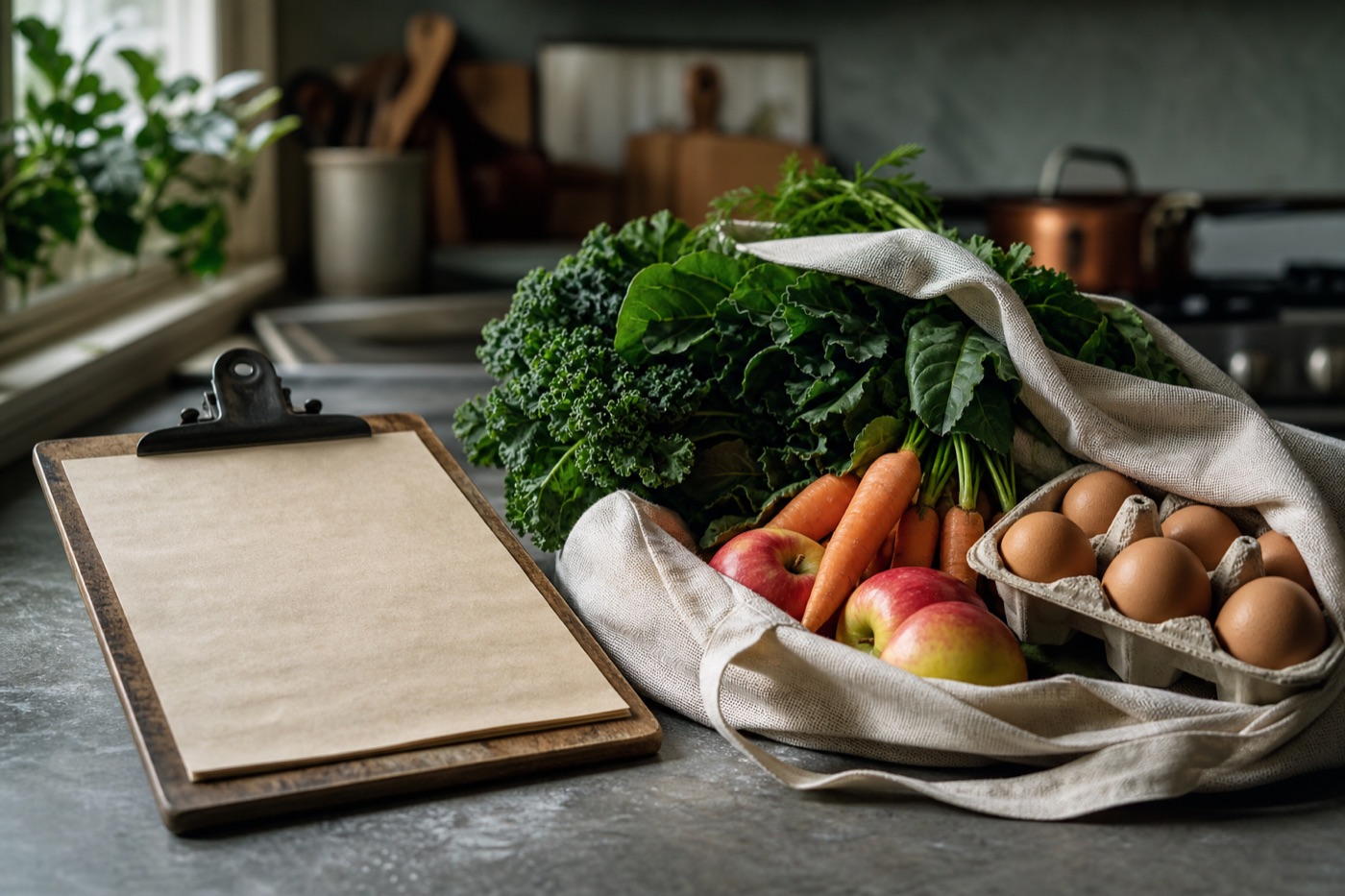
The short answer: write the list from your meals, not from the store. Decide what you will cook this week, list what each meal needs, then sort the items by store section. Add a standing set of healthy staples, and you will leave the store with food that turns into dinner rather than a cart of good intentions.
1. Start with a mini meal plan
Before you write a single item, sketch the week:
- Four or five dinners. Leave a night for leftovers and one for flexibility.
- Two or three breakfasts on repeat. Oatmeal, eggs, yogurt with fruit.
- Simple lunches. Leftovers, grain bowls, wraps or big salads.
- A few snacks. Fruit, nuts, yogurt, vegetables with hummus.
Planning fewer dinners than you have nights is the single best way to stop wasting food. If you are new to this, how to start eating healthy lays out a simple first week.
2. Check what you already have
Look in the fridge, freezer and pantry. Cross off anything you already own and note what needs using up. Building a meal around half a bag of spinach or a can of chickpeas saves money and keeps the fridge tidy.
3. Write the list by store section
Grouping items the way the store is laid out makes shopping faster and helps you spot gaps. Here is a template you can copy:
| Section | Healthy staples to consider |
|---|---|
| Produce | Leafy greens, carrots, peppers, onions, broccoli, tomatoes, apples, bananas, berries, citrus |
| Proteins | Eggs, chicken, fish, tofu, lean ground meat, canned or dried beans and lentils |
| Dairy and alternatives | Plain yogurt, milk or fortified soy milk, a flavorful cheese |
| Grains | Oats, brown rice, whole-wheat pasta, whole-grain bread, quinoa |
| Pantry | Canned tomatoes, canned tuna or salmon, nut butter, olive oil, vinegar, spices, broth |
| Frozen | Mixed vegetables, spinach, broccoli, berries, plain fish fillets |
| Snacks | Nuts, popcorn kernels, hummus, whole-grain crackers |
MyPlate’s food groups line up neatly with this layout: fruits, vegetables, grains, protein foods and dairy.
4. Keep a standing staples list
Some foods should almost always be in the house because they rescue tired nights. Keep a short list on the fridge or on your phone and restock when something runs low:
- Eggs
- Canned beans and canned fish
- Frozen vegetables
- Oats and one whole grain
- Canned tomatoes
- Olive oil and a few favorite spices
5. Be specific
“Yogurt” leads to a dessert cup with fruit syrup on the bottom. “Plain Greek yogurt, large tub” does not. “Bread” leads anywhere; “whole-grain bread, first ingredient whole wheat” leads somewhere useful. The more specific the line, the fewer decisions you make in the aisle. Our verdict on Greek yogurt explains why plain is the better buy.
6. Know which label lines matter
You do not need to read every word. On the Nutrition Facts label, the FDA’s format makes these easy to find:
- Serving size: everything else is based on it.
- Added sugars: the Dietary Guidelines recommend keeping these under 10 percent of daily calories.
- Sodium: adults are advised to stay under 2,300 milligrams a day.
- Fiber: more is generally better for grains, cereals and breads.
Foods that look wholesome on the front, like granola, are where a quick label check pays off most.
7. Do not take the perimeter rule too literally
“Shop the perimeter” is half right. Produce, dairy and fresh proteins sit around the edges, but so do the bakery and the doughnut case. Meanwhile, the center aisles hold some of the best buys in the store: oats, beans, lentils, canned fish, frozen vegetables, nuts and whole grains.
8. Shop smart in the moment
- Eat something before you go. Shopping hungry makes the snack aisle very persuasive.
- Stick to the list, but allow one or two swaps if something better or cheaper is in season.
- Compare unit prices on the shelf tag. Our guide on eating healthy on a budget has more money-saving tactics.
A sample one-week list
- Produce: spinach, carrots, bell peppers, onions, garlic, broccoli, bananas, apples, lemons
- Proteins: a dozen eggs, salmon fillets, chicken thighs, a block of tofu, 2 cans of chickpeas
- Dairy: large tub of plain Greek yogurt, milk or fortified soy milk, parmesan
- Grains: oats, brown rice, whole-wheat pasta
- Pantry: canned tomatoes, peanut butter, olive oil
- Frozen: mixed vegetables, berries
The short version
Plan four or five meals, check what you have, and write the list by store section. Keep a standing staples list, be specific about what you buy, check serving size, added sugars, sodium and fiber, and do not ignore the center aisles. A good list does half the work of eating well for you.
Your questions, answered
- What should be on a healthy grocery list?
- Vegetables and fruit (fresh, frozen or canned), proteins such as beans, eggs, fish, poultry and tofu, whole grains like oats and brown rice, dairy or fortified soy alternatives, and healthy fats such as nuts and olive oil. Add a few treats you enjoy so the plan sticks.
- How do I make a grocery list for the week?
- Pick four or five dinners, plus easy breakfasts and lunches, and write down every ingredient you do not already have. Group the items by store section so you shop in one pass, and add staples that are running low.
- Is it healthier to shop the perimeter of the store?
- It is a useful shortcut, since produce, dairy and fresh proteins usually sit around the edges, but it is incomplete. Many of the best-value healthy foods, such as oats, beans, canned fish, frozen vegetables and nuts, are in the center aisles.
- How can a grocery list help me eat healthier?
- A list keeps you focused on the meals you planned, cuts down on impulse buys and helps you keep healthy staples stocked, which makes it easier to cook at home on busy nights.
Sources
General information, not medical advice. If a food decision depends on your health, talk to a doctor or registered dietitian.
Nell writes the How-To guides: budgets, grocery lists, eating out and fitting good food into a busy week.
More from Nell
More from The Healthy Eaters
- How to Count Calories Accurately, Without Making It Your Whole Personality
Calorie counting is a useful tool for learning portions and reaching a goal. Done carelessly, it is guesswork with extra steps. Here is how to do it well. - How to Cut Back on Sugar Without Declaring War on Dessert
Most added sugar does not come from the cake you see coming. It comes from drinks, breakfast and snacks. Start there, taper slowly and keep the treats you love. - How to Eat Healthy at Restaurants Without Ordering a Sad Salad
Restaurant meals tend to be bigger, saltier and richer than what you cook at home. A few ordering habits handle most of that, and you still get dinner out. - How to Eat Healthy on a Budget: Cheap Food That Actually Feeds You
Healthy eating does not require a specialty grocer or a superfood budget. It requires a plan, a few humble staples and a freezer you are not afraid to use.