Is Oat Milk Healthy? Creamy, Popular and Lighter on Protein
Oat milk conquered the coffee bar on texture alone. As an everyday drink, it is a fine choice with a few gaps worth knowing before you swap the whole fridge.
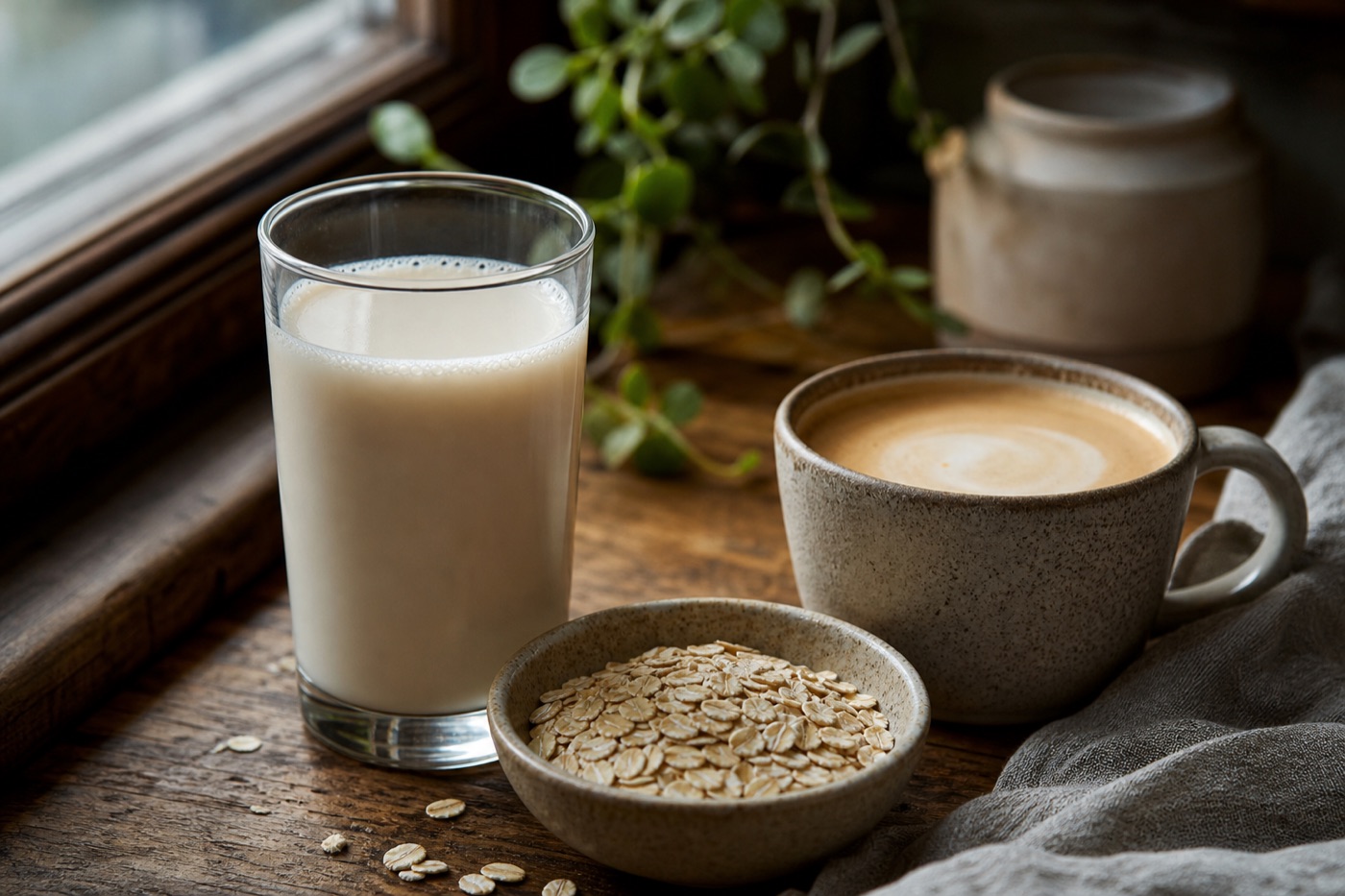
Oat milk is a perfectly reasonable thing to pour on cereal or into coffee, particularly if it is unsweetened and fortified. It is creamy, mild and friendly to people who avoid dairy. It is not, however, a nutritional twin of cow’s milk, and the biggest gap is protein.
What’s in it
Oat milk is made by blending oats with water, often treating the mixture with enzymes, straining it, and usually adding oil, salt, vitamins and minerals. Because recipes differ, a cup (240 ml) typically lands somewhere around 90 to 130 calories, with about 2 to 4 grams of protein, 1 to 2 grams of fiber and roughly 2 to 5 grams of fat, based on the range of values in USDA FoodData Central and on product labels.
Carbohydrate is usually the largest component, often 14 to 20 grams per cup. Many brands fortify with calcium, vitamin D, vitamin B12 and riboflavin to roughly match dairy milk, but not all do.
For comparison, a cup of cow’s milk has about 8 grams of protein, and a cup of unsweetened soy milk has about 7 grams.
The good
Dairy-free and nut-free. Oat milk suits people with lactose intolerance, a milk allergy or a nut allergy, and it is a common choice for those eating vegan.
Some soluble fiber. Oats contain beta-glucan, a soluble fiber linked to healthier cholesterol levels. A cup of oat milk carries a little of it, though much less than a bowl of oatmeal.
Fortification can fill gaps. A fortified oat milk can provide meaningful calcium, vitamin D and vitamin B12, nutrients that people who avoid dairy and animal foods sometimes run short on. The NIH Office of Dietary Supplements notes that fortified foods are a key B12 source for vegans.
Texture. Oat milk froths and blends well and has a naturally sweet, rounded flavor, which is why it took over coffee shops.
The catch
Low protein. With 2 to 4 grams per cup, oat milk will not do the protein work that dairy or soy milk does. If you swap it for milk in breakfast cereal, for example, the meal becomes lighter on protein.
Not part of the dairy group. The Dietary Guidelines for Americans count fortified soy beverages as part of the dairy group because their nutrition is similar to milk. Oat milk and most other plant milks are not counted there.
Sugars, added and otherwise. Enzymes used in processing break oat starch into simpler sugars, and depending on the product these may be listed as added sugars. Flavored and “barista” versions can carry more. The Dietary Guidelines recommend keeping added sugars under 10 percent of daily calories.
Added oils and gums. Oil gives creaminess, especially in barista blends, and adds calories. It is not harmful in these amounts, but it explains why some cartons have higher fat.
Fortification varies. Organic and homemade versions are often unfortified. If you rely on plant milk for calcium, check the label.
How to eat it well
- Choose unsweetened and fortified. That combination gives you calcium and vitamin D without extra sugar. Look at the “Added sugars” line.
- Shake the carton. Calcium can settle at the bottom, so shake before pouring.
- Make up the protein. Pair oat milk with protein-rich foods such as eggs, yogurt, tofu, beans or nuts. Our verdict on tofu covers one of the best plant options.
- Mix and match. Use oat milk where texture matters, like coffee, and soy or dairy milk where protein matters, like breakfast smoothies. Plain Greek yogurt can also carry the protein load.
- Watch the café drinks. Flavored oat milk lattes often add syrups. Our guide on how to cut back on sugar has easy swaps.
- Shop by label. Put “unsweetened, fortified plant milk” on your list rather than a specific type; see how to build a healthy grocery list.
Who should go easy
People with celiac disease should choose oat milk certified gluten-free. Those with diabetes may prefer unsweetened versions and should account for the carbohydrate; a doctor or registered dietitian can help. Parents should not use oat milk as a replacement for breast milk or infant formula, and should talk to their pediatrician before making it a toddler’s main milk, since it is much lower in protein and fat than whole cow’s milk. People with kidney disease may need to watch phosphate and potassium additives in fortified products.
The verdict
Unsweetened, fortified oat milk is a good dairy alternative for coffee, cereal and cooking. It is not a protein source, so cover that elsewhere, and read labels for added sugars and fortification. If protein matters most, soy milk is the closer swap.
Your questions, answered
- Is oat milk healthier than cow's milk?
- Not across the board. Cow's milk has about 8 grams of protein per cup and naturally contains calcium and other nutrients, while oat milk has less protein and relies on fortification. Oat milk is a good option if you avoid dairy, prefer the taste or are lactose intolerant.
- Does oat milk have a lot of sugar?
- It depends on the product. Some oat milks contain sugars created when enzymes break down oat starch during processing, and flavored versions add more. Check the Nutrition Facts label for total and added sugars, and choose unsweetened if you drink it often.
- Which plant milk has the most protein?
- Soy milk generally has the most, about 7 to 8 grams per cup, close to cow's milk. Pea-protein milks are also high. Oat, almond, rice and coconut milks are much lower, usually a few grams or less.
- Is oat milk gluten-free?
- Oats are naturally gluten-free, but they are often processed alongside wheat, barley or rye. People with celiac disease should choose oat milk labeled gluten-free and check with their doctor or dietitian.
Sources
- Dietary Guidelines for Americans
- USDA FoodData Central
- NIH Office of Dietary Supplements
- U.S. Food and Drug Administration
General information, not medical advice. If a food decision depends on your health, talk to a doctor or registered dietitian.
Jonah writes the Is It Healthy? series and the app guides, and has a soft spot for anything that comes in a jar.
More from Jonah
More from The Healthy Eaters
- Are Almonds Healthy? A Handful With Surprising Range
Almonds bring vitamin E, magnesium, fiber and good fats in a pocket-sized package. The only real trick is knowing when a handful becomes a bagful. - Are Bananas Healthy? The Case for Fruit's Most Portable Snack
Bananas get side-eye for their sugar and carbs. Here is what one actually contains, why ripeness changes the picture, and who should keep count. - Are Eggs Healthy? The Cholesterol Question, Cracked Open
Eggs have been nutrition's favorite villain and its favorite hero, sometimes in the same decade. Here is where the evidence sits now, and what goes on the plate beside them. - Are Potatoes Healthy? Rescuing the Spud From Its Reputation
The humble potato is richer in potassium and vitamin C than most people assume. How it gets to your plate matters far more than the potato itself.