Is Granola Healthy? The Health Food That Is Often Dessert
Oats, nuts and seeds sound wholesome, and they are. The oil, sugar and generous pour that hold them together are what deserve a closer look.
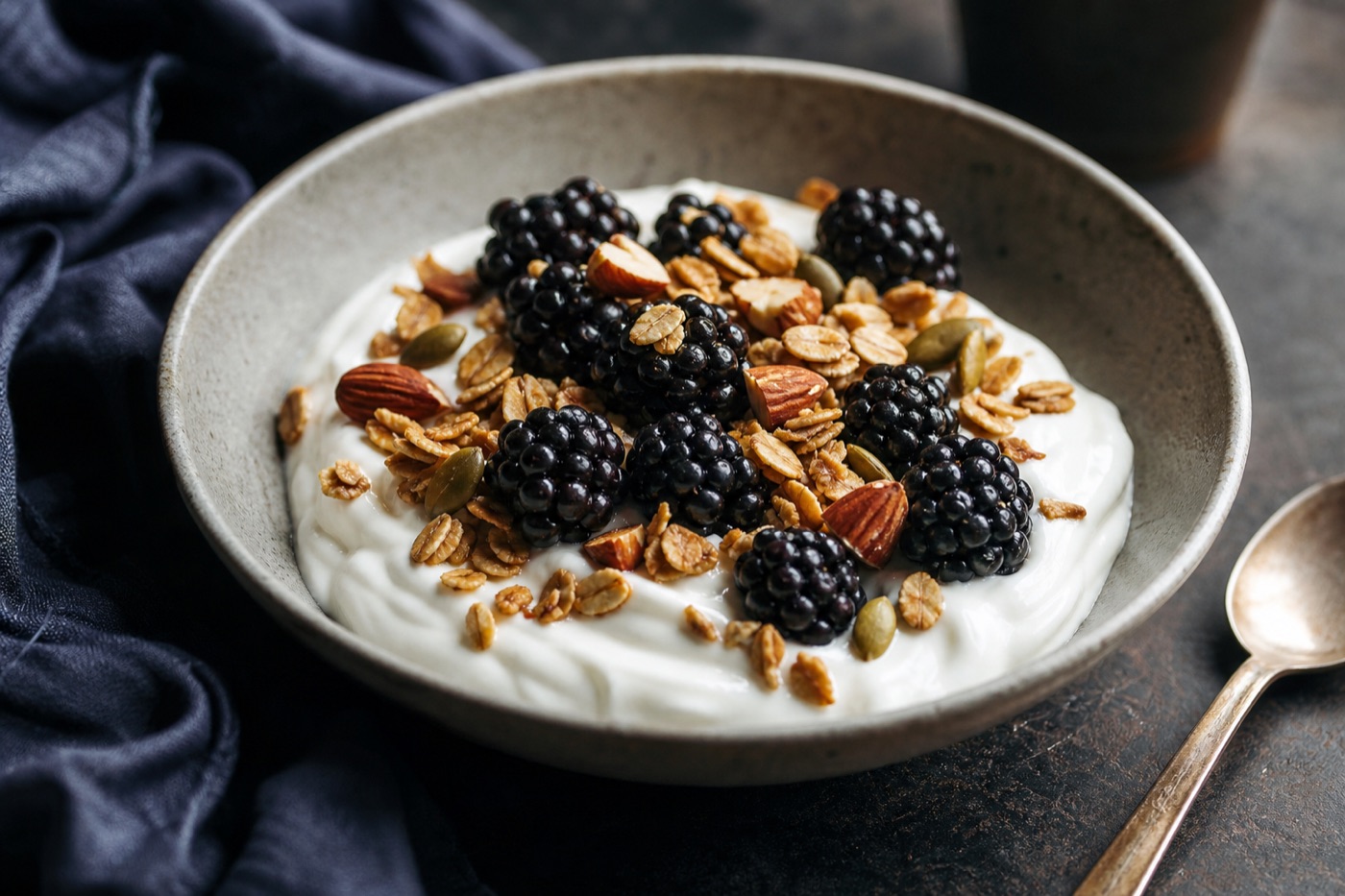
Granola is healthy in the same way a trail mix is: built from good ingredients, but dense enough that the serving size decides everything. Whole oats, nuts and seeds bring fiber and good fats. The added sugar and oil that bind it into clusters, plus the habit of pouring it like cornflakes, can make a bowl closer to a pastry than a breakfast.
What’s in it
Granola is a moving target, because recipes vary so much. As a rough guide, a half cup of typical granola lands around 200 to 300 calories, with something like 2 to 5 grams of fiber and 4 to 7 grams of protein, based on the spread of values in USDA FoodData Central and on product labels. Fat often runs 6 to 15 grams per half cup, mostly from nuts, seeds and the oil used for toasting.
The main ingredients are usually rolled oats, a sweetener (sugar, honey, syrup or fruit juice), oil, and some combination of nuts, seeds and dried fruit. Each one pushes the numbers in a different direction.
The good
Whole grains. Oats are a whole grain, and the Dietary Guidelines for Americans recommend that at least half of our grains be whole. Oats also contain beta-glucan, a soluble fiber linked with healthier cholesterol levels. The FDA allows a heart-health claim for foods that provide enough soluble fiber from whole oats.
Nuts and seeds. Almonds, walnuts, pumpkin seeds and sunflower seeds add unsaturated fat, protein, vitamin E and magnesium. We cover those benefits in are almonds healthy.
Staying power, in the right dose. Fat, fiber and a bit of protein mean a small amount of granola can satisfy. A few tablespoons over yogurt turn a light snack into something that lasts until lunch.
Texture. Crunch matters. Granola can make plain yogurt, fruit or smoothie bowls more enjoyable to eat, which is a real benefit if it helps you eat more of those foods.
The catch
Added sugar. Many granolas are sweetened generously, and clustered or “crunchy” styles often use extra syrup to glue everything together. Honey and maple syrup count as added sugar too, as we explain in is honey healthy. The Dietary Guidelines for Americans recommend keeping added sugars under 10 percent of daily calories.
Calorie density. Granola is compact. A cup poured into a bowl can easily mean 400 to 600 calories before milk, which surprises a lot of people who chose it as the healthy option.
Tiny label servings. Some packages list a serving as a quarter cup, which looks small in a bowl. Comparing products at the same serving size, ideally by grams, is the only fair test.
Extras. Chocolate chips, yogurt-coated clusters and candied fruit push granola firmly into dessert territory. Dried fruit is concentrated sugar even without added sweeteners.
How to eat it well
- Use it as a topping, not a base. Two to four tablespoons over plain Greek yogurt and fresh fruit gives you crunch, flavor and protein without the calorie spike.
- Measure your usual pour once. Tip it into a measuring cup. Many people discover they are eating two or three servings.
- Read the list. Look for whole grains first, nuts or seeds high up, and a low number of grams on the added sugars line.
- Make your own. Toss 3 cups of rolled oats with 1 cup of chopped nuts and seeds, 2 tablespoons of oil, 2 tablespoons of maple syrup, cinnamon and a pinch of salt. Bake at a moderate temperature, stirring once, until golden. It tastes richer than you would expect and is far less sweet than many store versions.
- Add fruit after. Fresh berries or sliced apple bring sweetness with fiber and water instead of more syrup.
- Lower the sugar gradually. If you are used to very sweet granola, mix it half and half with plain toasted oats for a few weeks. Our guide on how to cut back on sugar uses this tapering trick.
Who should go easy
People with diabetes or prediabetes should account for granola’s carbohydrates and sugar within their meal plan and may benefit from guidance from a registered dietitian. Those with nut, sesame or other food allergies need to read labels closely, since cross-contact is common in granola production. People with celiac disease should choose granola labeled gluten-free, because oats are often processed alongside wheat.
The verdict
Granola is a healthy food with dessert tendencies. Pick a whole-grain, low-sugar version or make your own, sprinkle rather than pour, and pair it with yogurt and fruit. Used as a topping, it adds crunch and fiber; used as a full bowl, it adds up fast.
Your questions, answered
- Is granola good for weight loss?
- It can fit, but it is easy to overeat. Granola packs a lot of calories into a small volume, and many people pour two or three label servings into a bowl. Using a few tablespoons as a topping on yogurt or fruit is the more manageable approach.
- Is granola healthier than other cereals?
- Not automatically. Granola usually has more fiber and healthy fat than refined cereals, but also more calories and often as much added sugar. Plain oatmeal or a high-fiber, low-sugar cereal can be a lighter everyday choice.
- What should I look for in a healthy granola?
- Look for whole grains such as oats as the first ingredient, nuts or seeds near the top of the list, and a low number on the added sugars line. Compare products using the same serving size, since label servings vary widely.
- Is homemade granola healthier?
- It can be, because you control the sugar and oil. Toasting oats, nuts and seeds with a modest amount of oil, a little maple syrup or honey and spices gives you a granola with far less sugar than many store-bought versions.
Sources
General information, not medical advice. If a food decision depends on your health, talk to a doctor or registered dietitian.
Clara runs The Healthy Eaters and edits every verdict before it goes out. She likes food writing that answers the question in the first paragraph.
More from Clara
More from The Healthy Eaters
- Are Almonds Healthy? A Handful With Surprising Range
Almonds bring vitamin E, magnesium, fiber and good fats in a pocket-sized package. The only real trick is knowing when a handful becomes a bagful. - Are Bananas Healthy? The Case for Fruit's Most Portable Snack
Bananas get side-eye for their sugar and carbs. Here is what one actually contains, why ripeness changes the picture, and who should keep count. - Are Eggs Healthy? The Cholesterol Question, Cracked Open
Eggs have been nutrition's favorite villain and its favorite hero, sometimes in the same decade. Here is where the evidence sits now, and what goes on the plate beside them. - Are Potatoes Healthy? Rescuing the Spud From Its Reputation
The humble potato is richer in potassium and vitamin C than most people assume. How it gets to your plate matters far more than the potato itself.