Is Peanut Butter Healthy? What a Spoonful Really Gives You
It is creamy, cheap and suspiciously beloved. Here is what two tablespoons actually deliver, where the jar can trip you up, and how to pick a good one.
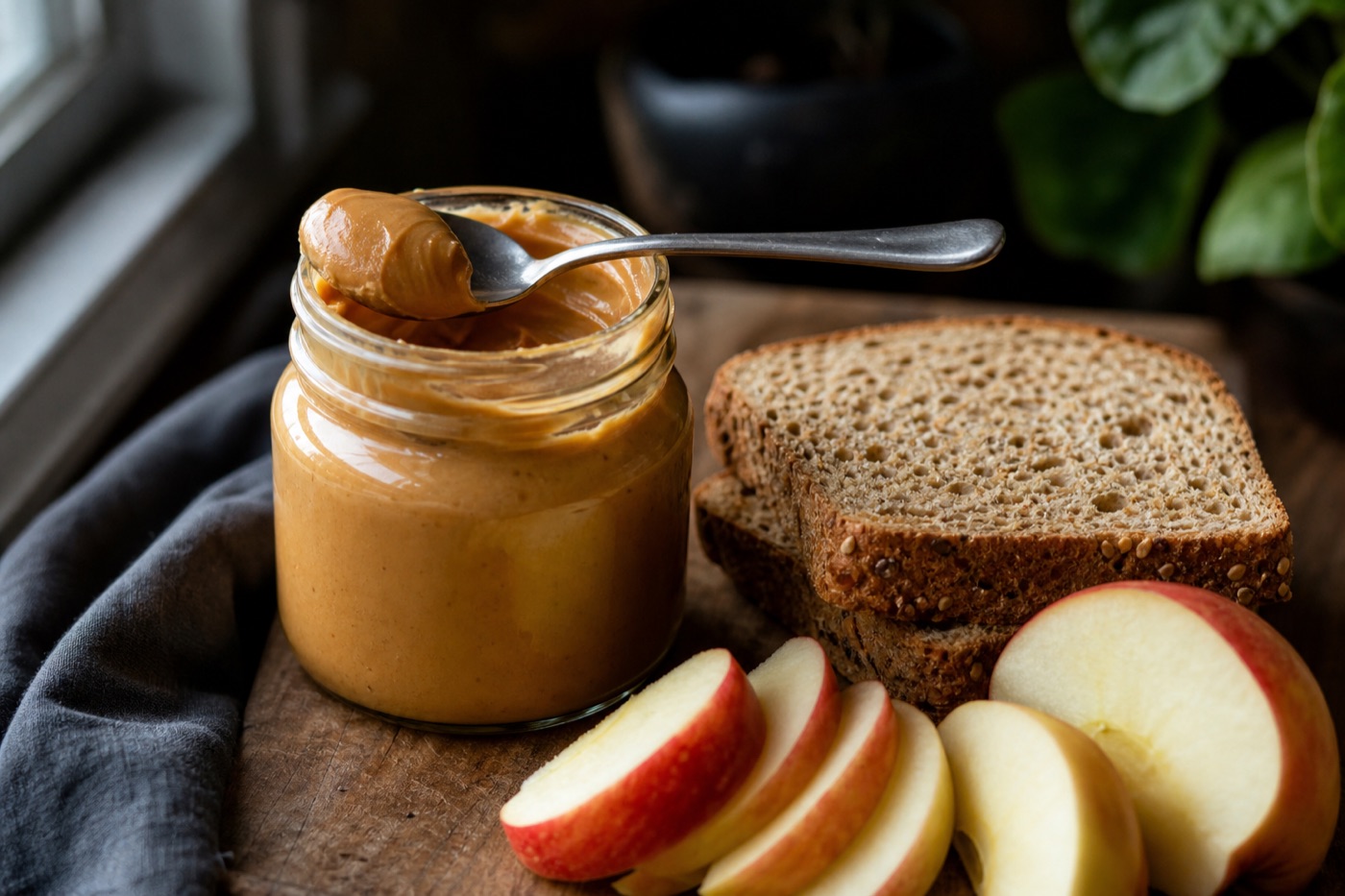
Peanut butter is healthy for most people, as long as the jar holds mostly peanuts and the spoon is not heaped. Two level tablespoons bring a useful mix of protein, fiber and unsaturated fat. The trouble starts when that serving quietly doubles, or when the ingredient list reads like a frosting recipe.
What’s in it
A standard 2-tablespoon serving (32 g) of smooth peanut butter carries about 190 calories, about 7 grams of protein, about 16 grams of fat and roughly 2 grams of fiber, based on typical values in USDA FoodData Central. Most of the fat is monounsaturated and polyunsaturated, the kinds nutrition guidance encourages in place of saturated fat. Saturated fat lands at around 3 grams per serving.
Peanuts also chip in vitamin E, niacin, magnesium and a bit of potassium. It is not a multivitamin in a jar, but it is not empty food either.
The calorie count comes down to simple math. Fat supplies 9 calories per gram, against 4 for protein and carbohydrate, so a spread that is roughly half fat by weight will always be dense. That is not a flaw. It just means portion size matters far more here than it does with cucumber.
The good
It keeps you going. Protein, fat and fiber all slow digestion, so toast with peanut butter tends to carry you further into the morning than toast with jam alone.
It upgrades your fats. Spreading peanut butter instead of butter shifts your intake from saturated toward unsaturated fat. That is the direction the Dietary Guidelines for Americans point, with their advice to keep saturated fat under 10 percent of daily calories.
It is easy plant protein. Seven grams will not rival a chicken breast, but it adds up across a day, and for people who eat mostly plants it is a dependable building block. Peanuts are technically legumes, and they pair naturally with whole grains. For more ways to stack protein through the day, see our guide on how to eat more protein.
It is cheap and keeps for months. Few shelf-stable foods deliver this much nutrition per dollar, which is why it shows up in our advice on eating healthy on a budget.
The catch
Calorie density. Almost nobody measures. A “tablespoon” lifted with a dinner spoon is often two, and eating straight from the jar while standing at the counter can pass 400 calories before you notice. That is not a character flaw; it is arithmetic.
Added sugar and salt. Many conventional jars add both. Reduced-fat versions are a particular trap: they often swap some fat for sugar and starchy fillers and end up with nearly the same calories. The “Added sugars” line on the Nutrition Facts label tells you what you need to know in two seconds.
Stabilizing oils. No-stir jars commonly include palm oil or hydrogenated vegetable oil so the oil does not separate. The amounts are small, but if you want the simplest product, look for a label that says peanuts, and maybe salt, and nothing else.
Allergy. Peanuts are one of the major food allergens recognized by the FDA, and reactions can be severe.
How to eat it well
- Calibrate your eye. Level off 2 tablespoons with an actual measuring spoon a few times. After that, you will recognize a real serving on sight.
- Stir, then chill. Natural peanut butter separates. Stir it thoroughly once, then keep it in the fridge to slow separation and keep the oil tasting fresh.
- Pair it with fiber. Apple slices, celery, oatmeal and whole-grain toast all make the serving feel bigger. Peanut butter on a sliced banana is a classic for good reason; here is our take on whether bananas are healthy.
- Make it a sauce. Whisk a tablespoon with lime juice, soy sauce, garlic and a splash of warm water. That one spoonful now flavors a whole bowl of noodles and vegetables.
- Consider powdered versions. Powdered peanut butter has most of the oil pressed out, so it delivers the flavor with far fewer calories. It is less filling, though, because the fat is what lingers.
- Rotate your nut butters. Almond butter has similar calories and a slightly different mineral profile. Neither is a clear winner, as we explain in are almonds healthy.
Who should go easy
Anyone with a peanut allergy should avoid it completely and follow the plan from their allergist. Parents introducing peanut foods to a baby should ask their pediatrician about timing and method, since the advice depends on the child’s allergy risk.
People limiting sodium for blood pressure should choose unsalted versions. If you have kidney disease, you may also have potassium or phosphorus targets, so ask a registered dietitian how nut butters fit your plan. And if you are tracking intake closely, measure rather than estimate.
The verdict
Peanut butter earns its place in the pantry. Buy a jar with a short ingredient list, measure your serving until your eye learns it, and pair it with fruit, vegetables or whole grains. Treat it as a rich, satisfying food rather than a bottomless one and it pulls its weight.
Your questions, answered
- Is peanut butter good for weight loss?
- It can fit. Its protein, fat and fiber help a snack feel satisfying, which may make it easier to eat sensibly later. The risk is portion creep: two level tablespoons are about 190 calories, and a casual scoop from the jar is often double that.
- Is natural peanut butter healthier than regular?
- Usually a little. Natural versions tend to contain only peanuts and sometimes salt, while conventional jars often add sugar and stabilizing oils. Calories and protein are similar, so the main difference is what you avoid rather than what you gain.
- How much peanut butter is OK per day?
- There is no official limit, but one 2-tablespoon serving a day fits comfortably into most eating patterns. Treat it as a fat-and-protein portion rather than a free spread, and adjust to your overall calorie needs.
- Is peanut butter a good source of protein?
- It is a decent supporting source, with about 7 grams per 2 tablespoons. Because most of its calories come from fat, it works best alongside leaner proteins such as yogurt, eggs, beans or tofu rather than as your main source.
Sources
- USDA FoodData Central
- Dietary Guidelines for Americans
- Harvard T.H. Chan School of Public Health, The Nutrition Source
- U.S. Food and Drug Administration
General information, not medical advice. If a food decision depends on your health, talk to a doctor or registered dietitian.
Clara runs The Healthy Eaters and edits every verdict before it goes out. She likes food writing that answers the question in the first paragraph.
More from Clara
More from The Healthy Eaters
- Are Almonds Healthy? A Handful With Surprising Range
Almonds bring vitamin E, magnesium, fiber and good fats in a pocket-sized package. The only real trick is knowing when a handful becomes a bagful. - Are Bananas Healthy? The Case for Fruit's Most Portable Snack
Bananas get side-eye for their sugar and carbs. Here is what one actually contains, why ripeness changes the picture, and who should keep count. - Are Eggs Healthy? The Cholesterol Question, Cracked Open
Eggs have been nutrition's favorite villain and its favorite hero, sometimes in the same decade. Here is where the evidence sits now, and what goes on the plate beside them. - Are Potatoes Healthy? Rescuing the Spud From Its Reputation
The humble potato is richer in potassium and vitamin C than most people assume. How it gets to your plate matters far more than the potato itself.