Is Dark Chocolate Healthy? A Treat With Better Credentials
Dark chocolate has a reputation as the dessert you can defend. It earns some of that, as long as you remember it is still dessert.
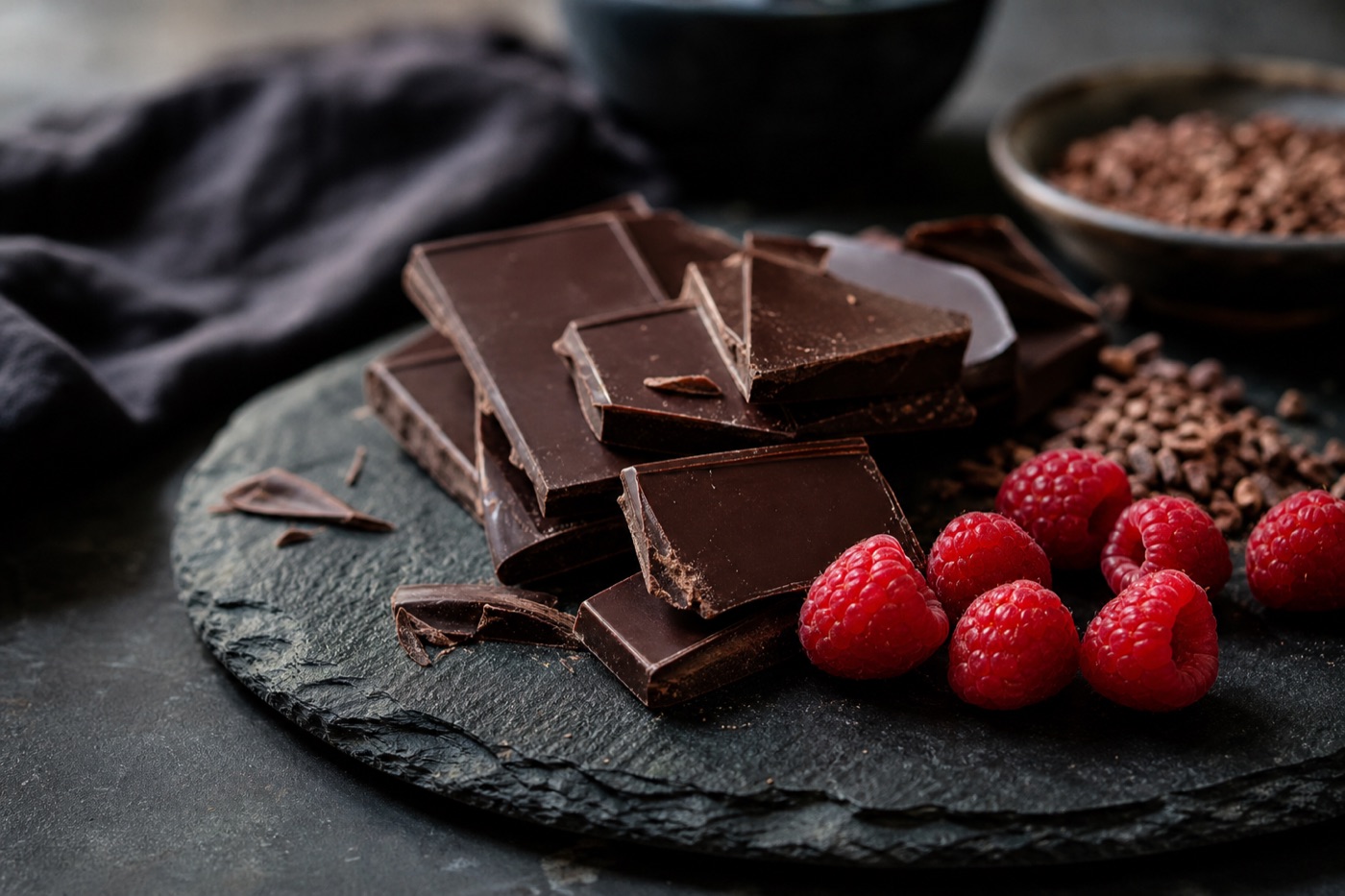
Dark chocolate is one of the better treats you can choose, and it is still a treat. High-cacao bars bring fiber, minerals and plant compounds that milk chocolate largely lacks. They also bring saturated fat, sugar and roughly 170 calories an ounce, so the health story is mostly about the size of the piece.
What’s in it
An ounce (28 g) of dark chocolate with 70 to 85 percent cacao contains about 170 calories, roughly 12 grams of fat (about 7 grams saturated), around 3 grams of fiber, about 7 grams of sugar and a couple of grams of protein, based on typical USDA FoodData Central values. That same ounce provides around 3 milligrams of iron, about 65 milligrams of magnesium and some copper and manganese, plus about 20 to 25 milligrams of caffeine.
The cacao percentage on the wrapper tells you how much of the bar comes from the cocoa bean, as solids and cocoa butter combined. Most of the rest is sugar. A 70 percent bar is therefore about 30 percent sweetener and flavorings; a 50 percent bar is closer to half sugar.
The good
Flavanols. Cocoa beans are rich in flavanols, a group of plant compounds that researchers have studied for their effects on blood vessels and blood pressure. Darker, less processed chocolate tends to keep more of them.
Useful minerals. For a sweet, an ounce of dark chocolate carries a surprising amount of iron, magnesium and copper. It is not a reason to eat it, but it is a nice bonus.
A more forgiving fat. Much of the saturated fat in cocoa butter is stearic acid. The Harvard T.H. Chan School of Public Health notes that stearic acid appears to have a more neutral effect on LDL cholesterol than some other saturated fats. That does not make chocolate a low-fat food.
It satisfies in small doses. Intense flavor and a bitter edge make dark chocolate easier to stop at two squares than a candy bar. Letting a piece melt slowly stretches it further still.
The catch
Calorie density. At about 170 calories per ounce, a whole 3.5-ounce bar runs close to 600. Snapping off “just one more row” adds up faster than it feels.
Sugar. Even at 70 percent, sugar is a meaningful ingredient. The Dietary Guidelines for Americans recommend keeping added sugars under 10 percent of daily calories, and chocolate counts. Lower-percentage bars, chocolate-coated snacks and anything with caramel or nougat carry much more.
Processing varies. Cocoa treated with alkali, sometimes labeled “Dutch-processed,” tastes milder but generally loses some flavanols.
Heavy metals. Testing over the years has found lead and cadmium in some dark chocolate. Cocoa plants can take up cadmium from soil, and lead may be picked up during drying and processing. The FDA monitors metals in foods. Keeping portions modest and varying your treats is a sensible approach, particularly for children and pregnant people.
How to eat it well
- Pick 70 percent or higher. Choose the darkest bar you actually enjoy; forcing down chocolate you dislike defeats the purpose.
- Portion it at the start. Break off one or two squares, then put the bar away.
- Pair it with fruit or nuts. A square with a handful of raspberries, orange segments or a few almonds turns it into a more filling snack. We look at the nut side of that pairing in are almonds healthy.
- Use cocoa powder. Unsweetened cocoa delivers chocolate flavor and flavanols with almost no fat or sugar. Stir it into oatmeal, plain yogurt or a smoothie.
- Watch the extras. Sea salt is fine; caramel, toffee and cookie pieces turn the bar into candy.
- Swap, do not stack. If dark chocolate replaces a sweeter dessert, good. If it is added on top, it is just more sugar. Our guide on how to cut back on sugar can help, and for a crunchy savory snack, see is popcorn healthy.
Who should go easy
People sensitive to caffeine, those with acid reflux and anyone prone to migraines triggered by chocolate may want smaller amounts or earlier timing. Those managing diabetes should count chocolate within their carbohydrate plan, and people with kidney disease may need to watch its potassium and phosphorus; a doctor or registered dietitian can help. Pregnant people and parents of young children may prefer to keep portions small given the heavy-metal findings. Milk and nut allergies are common cross-contact concerns, so read labels carefully.
The verdict
Dark chocolate is a treat with better credentials than most. Choose a high-cacao bar, savor a square or two, and enjoy it for what it is: a pleasure that happens to carry some fiber and minerals, not a health food in disguise.
Your questions, answered
- How much dark chocolate should I eat a day?
- There is no official amount. Many people find that a square or two, around half an ounce to an ounce, satisfies a craving. At about 170 calories per ounce, larger daily amounts add up quickly, so treat it as a small, deliberate treat.
- What percentage of dark chocolate is healthiest?
- Higher cacao percentages, roughly 70 percent and up, generally mean more cocoa solids and less sugar per bite. Bars around 85 percent are quite bitter for many people. Pick the highest percentage you genuinely enjoy.
- Is dark chocolate good for your heart?
- Cocoa contains flavanols that have been studied for effects on blood vessels and blood pressure, but chocolate also brings calories, sugar and saturated fat. It is best viewed as a better-than-average treat rather than a heart medicine.
- Does dark chocolate have caffeine?
- Yes, a modest amount. An ounce of 70 to 85 percent dark chocolate typically has around 20 to 25 milligrams of caffeine, far less than a cup of coffee but enough to matter for some people late in the evening.
Sources
- USDA FoodData Central
- Harvard T.H. Chan School of Public Health, The Nutrition Source
- Dietary Guidelines for Americans
- U.S. Food and Drug Administration
General information, not medical advice. If a food decision depends on your health, talk to a doctor or registered dietitian.
Clara runs The Healthy Eaters and edits every verdict before it goes out. She likes food writing that answers the question in the first paragraph.
More from Clara
More from The Healthy Eaters
- Are Almonds Healthy? A Handful With Surprising Range
Almonds bring vitamin E, magnesium, fiber and good fats in a pocket-sized package. The only real trick is knowing when a handful becomes a bagful. - Are Bananas Healthy? The Case for Fruit's Most Portable Snack
Bananas get side-eye for their sugar and carbs. Here is what one actually contains, why ripeness changes the picture, and who should keep count. - Are Eggs Healthy? The Cholesterol Question, Cracked Open
Eggs have been nutrition's favorite villain and its favorite hero, sometimes in the same decade. Here is where the evidence sits now, and what goes on the plate beside them. - Are Potatoes Healthy? Rescuing the Spud From Its Reputation
The humble potato is richer in potassium and vitamin C than most people assume. How it gets to your plate matters far more than the potato itself.